Wine and cellars3 min read
What makes Alsace Gewurztraminer unique?
Updated on
In brief
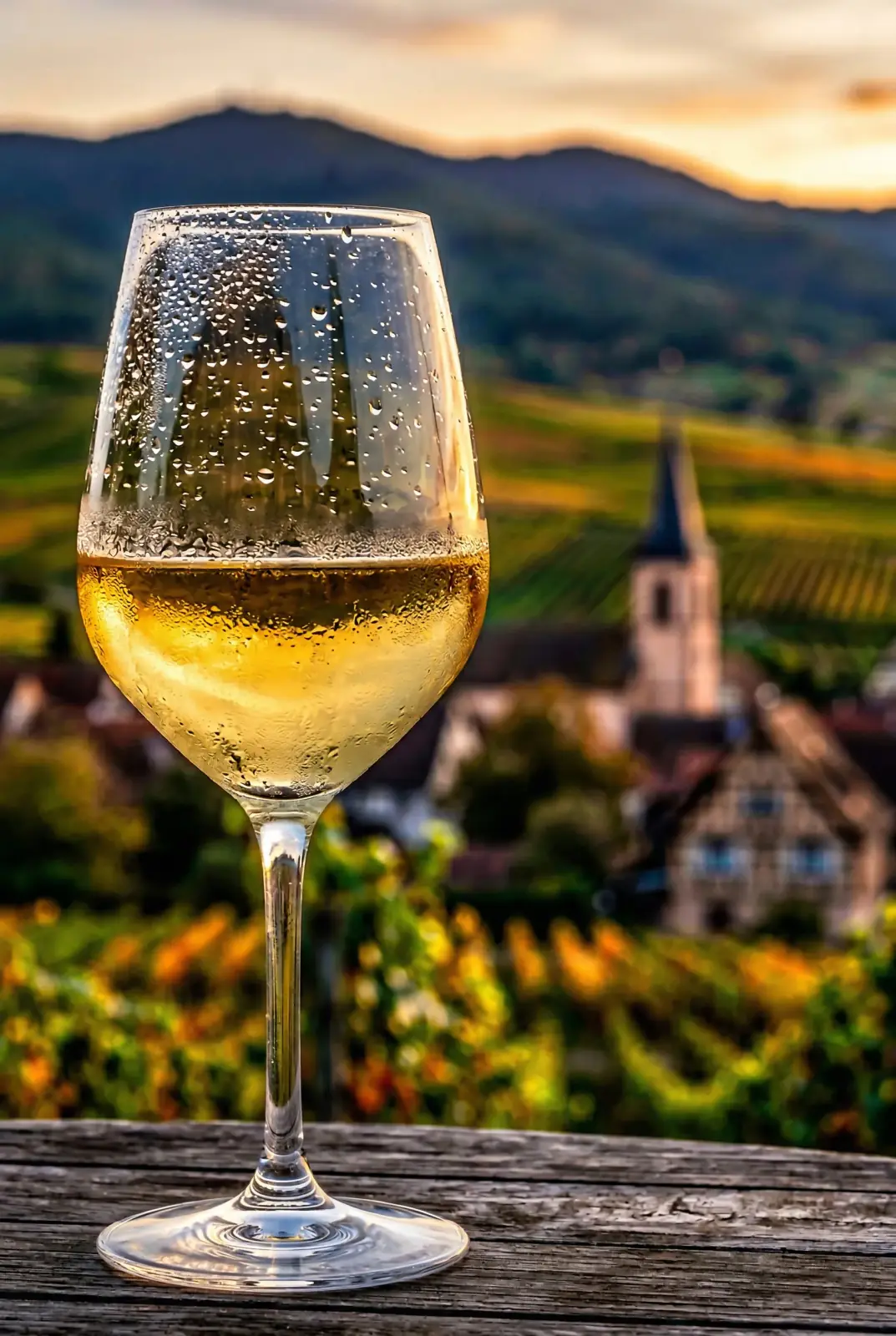
Gewurztraminer is the most aromatic grape of Alsace: lychee, rose, sweet spices, a signature you recognise instantly. It ranges from dry to the dessert-style Selection de Grains Nobles, with off-dry as the historic style. It is the natural partner of Munster cheese, foie gras and spicy cuisines, and one of the four noble grapes allowed in Grand Cru wines.
No French wine resembles Gewurztraminer. Its name literally means spiced traminer, and a single sniff is enough to recognise it: lychee, rose petal, ginger, sometimes mango and honey. This exuberant character makes it the favourite grape of visitors discovering Alsace, and the most divisive among lovers of bone-dry whites. A portrait of a grape that leaves no one indifferent, with the keys to choosing it and the best places to taste it.
An aromatic profile unique in the world
Gewurztraminer belongs to the traminer family, pink-skinned grapes of which it is the most aromatic version. Its skin, rich in terpene compounds, gives those instantly identifiable exotic scents: lychee and rose first, then sweet spices, candied fruit and candied citrus in the richer versions. On the palate it is ample and fleshy, with moderate acidity and often a slightly unctuous feel. It is a wine of texture as much as aromas, which is why it stands up to bold cuisines where crisp whites give up.
From dry to dessert wine: choosing your style
Gewurztraminer spans the whole sweetness scale, and that is the first thing to check before buying:
- Dry: increasingly common, all aromas with a clean finish, ideal at the table
- Off-dry to sweet: the historic style, round and generous, the one of family cellars
- Vendanges Tardives: harvested overripe, rich and concentrated, a great dessert or contemplation wine
- Selection de Grains Nobles: from hand-sorted botrytised berries, rare and luscious, among the greatest sweet wines of France
The terroirs and grands crus that elevate it
Gewurztraminer is one of the four noble grapes allowed in the 51 Alsace Grands Crus, and certain sites are especially associated with it. Hengst in Wintzenheim and Zinnkoepfle in Soultzmatt and Westhalten give powerful, pedigreed versions; Mambourg in Sigolsheim and Furstentum in Kientzheim wines of great floral finesse; Sporen in Riquewihr an opulent, long-ageing style. These slopes concentrate between Colmar and Guebwiller, in the heart of the Wine Route: one day is enough to approach several of them and compare the expressions of one grape on different soils.
At the table and in the cellar: how to enjoy it
Gewurztraminer is the designated companion of farmhouse Munster, whose power it wraps up better than any red. It also excels with foie gras, Indian, Thai and Moroccan cuisines, blue cheeses and exotic fruit desserts. Serve it between 10 and 12 degrees Celsius, never ice-cold. In the cellar, ask to taste a dry and a sweet version side by side: the gap in style within a single grape is one of the most telling experiences of an Alsace tasting. The FJ13 tours through Riquewihr, Kientzheim and the Guebwiller valley lend themselves naturally to it.
Frequently asked questions
Is Gewurztraminer a sweet wine?
Not always. The traditional style is off-dry to sweet, but dry versions are multiplying. Since the 2021 vintage, the sweetness level appears on AOC Alsace labels: check for the mention dry, off-dry, sweet or rich.
What should you drink Gewurztraminer with?
Munster cheese is the emblematic pairing, followed by foie gras and spicy dishes such as curry or tagine. As a Vendanges Tardives, it accompanies fruit desserts or is enjoyed on its own at the end of a meal.
Why does Gewurztraminer smell of lychee and rose?
Its skin is naturally rich in terpenes, the same aromatic compounds found in lychee and rose. It is a signature of the grape, not a flavouring: nothing is added to the wine.
Which villages should you visit to taste great Gewurztraminers?
Riquewihr and Kientzheim for the Sporen and Furstentum grands crus, Sigolsheim for Mambourg, Wintzenheim for Hengst, and the Soultzmatt valley for Zinnkoepfle. All lie on the Wine Route between Colmar and Guebwiller.
Ready to plan your day?
Build your custom itinerary or browse our ready-to-book tours.