Journal
Alsace Wine Route Guide
Detailed answers to the most frequent questions from travelers: villages to visit, traveling without a car, best season, pricing, Grands Crus.
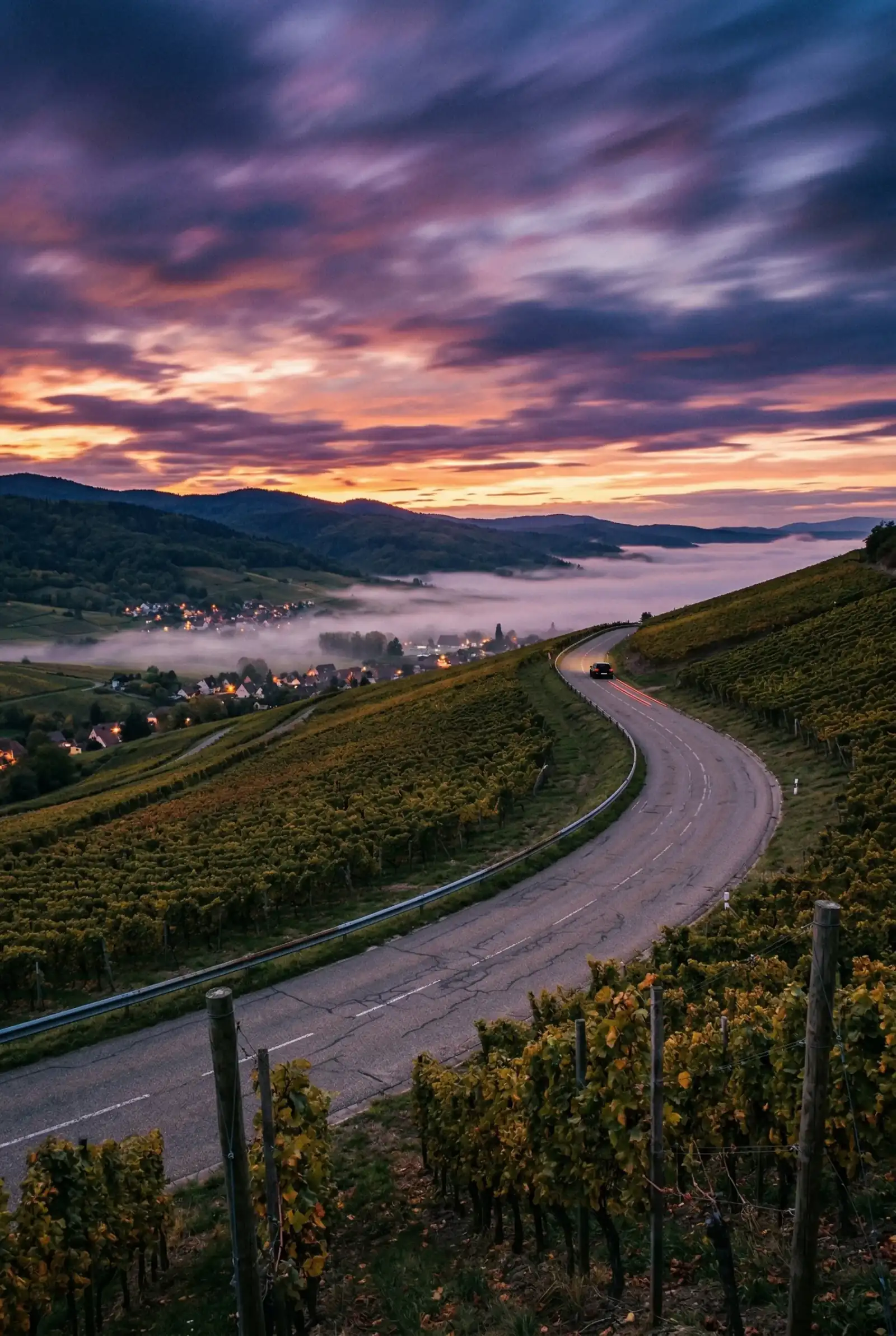
Featured · Planning4 min read
How to Visit the Alsace Wine Route Without a Car
Yes, the Alsace Wine Route can be fully explored without driving. The most flexible option is a private chauffeur, optionally combined with the TER regional train, the Wine Route cycle path or a group tour depending on your pace.
Read the article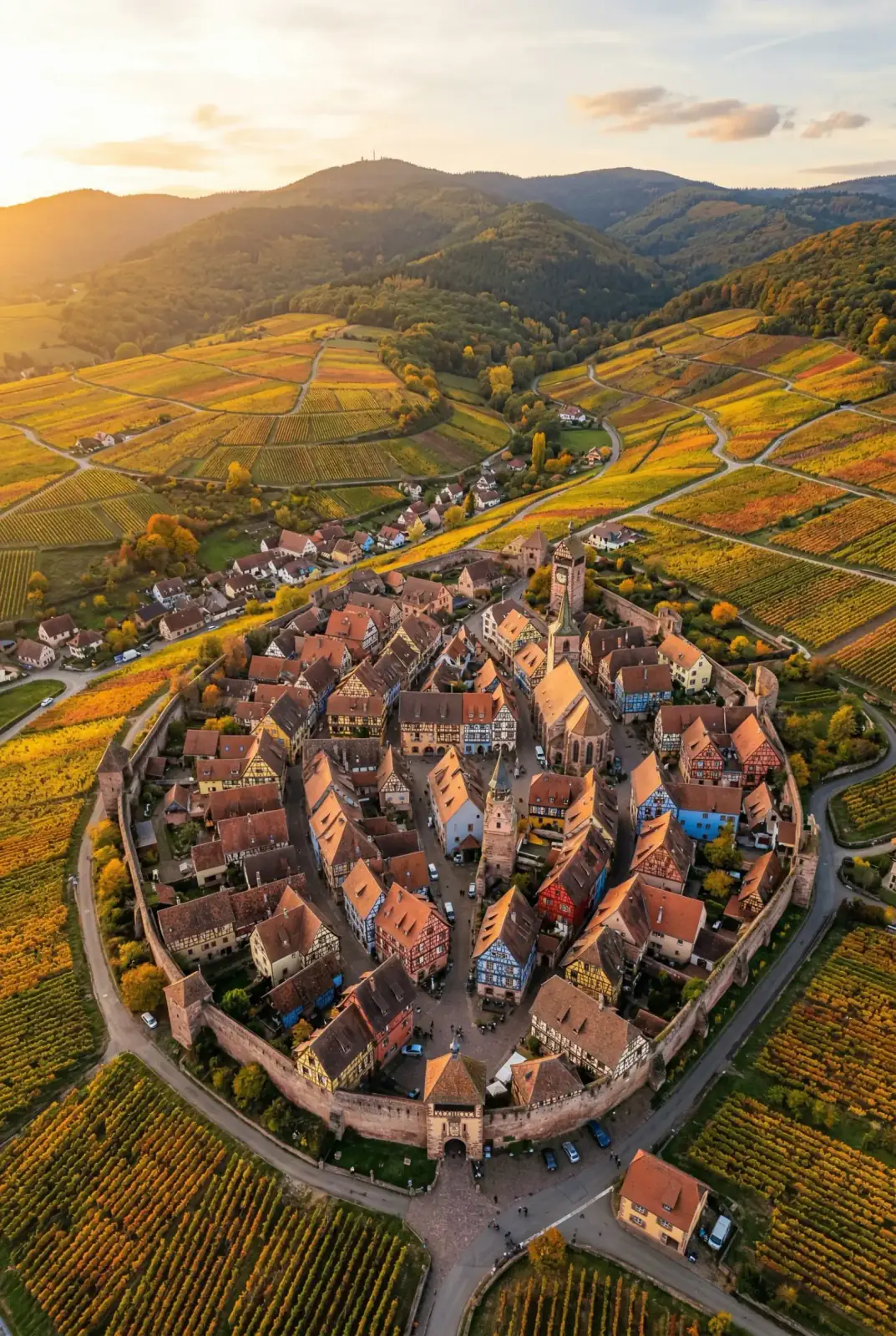
Villages4 min read
The Most Beautiful Villages of the Alsace Wine Route
The most remarkable villages on the Alsace Wine Route are Riquewihr, Kaysersberg, Eguisheim, Ribeauvillé, Obernai and Hunspach. Kaysersberg and Eguisheim hold the most photogenic half-timbered architecture, Riquewihr concentrates the densest wine offering, and Hunspach delivers the most authentic atmosphere off the main track.
Planning3 min read
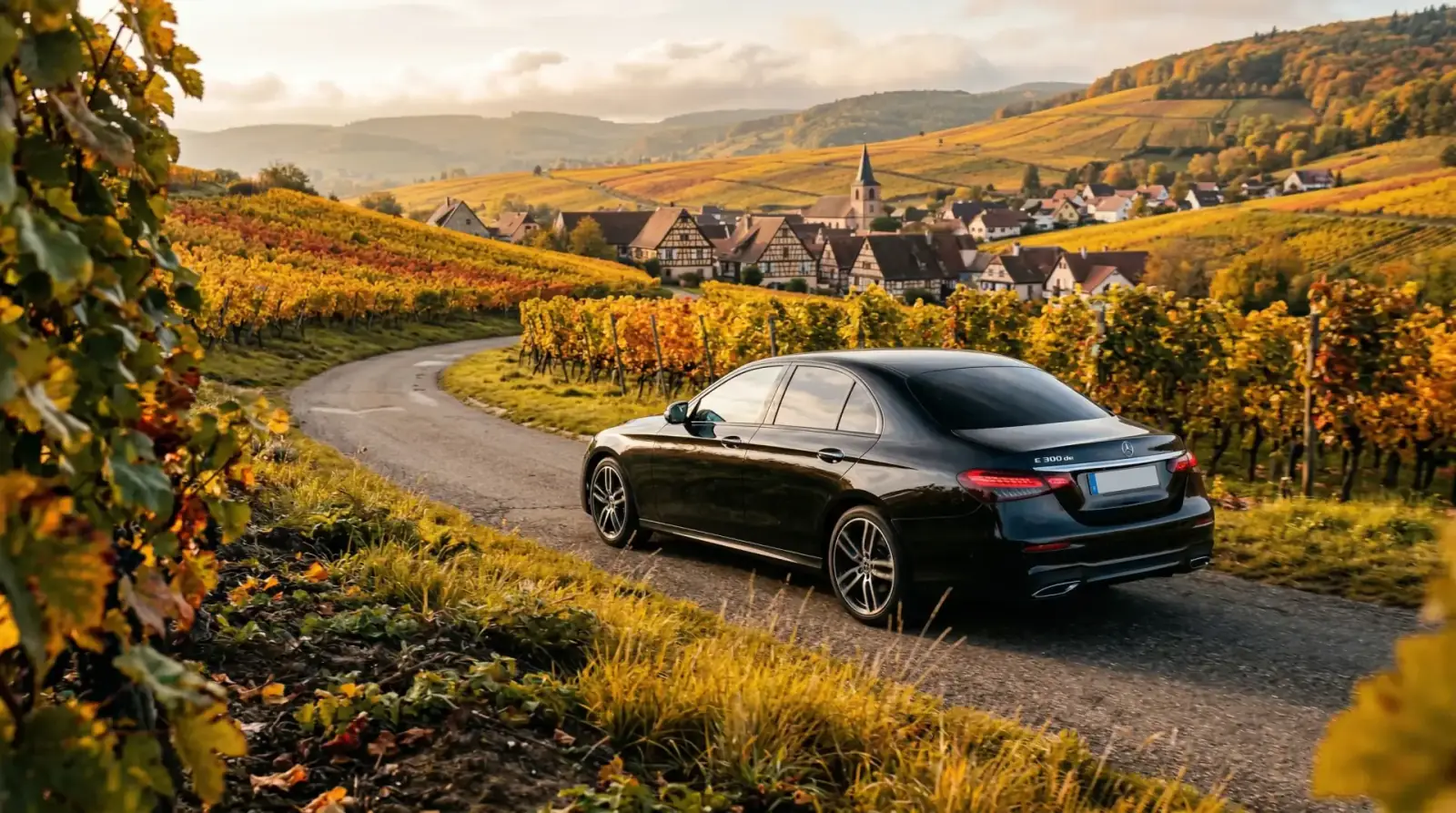
Alsace Wine Route: How Much a Private Wine Tour Costs
A private wine tour on the Alsace Wine Route costs between EUR 440 and EUR 640 in a sedan (1 to 3 passengers) and between EUR 440 and EUR 880 in a van (4 to 7 passengers), for durations of 4 to 8 hours. The rate is all-inclusive: vehicle, driver, fuel, vineyard kilometers.
Planning3 min read
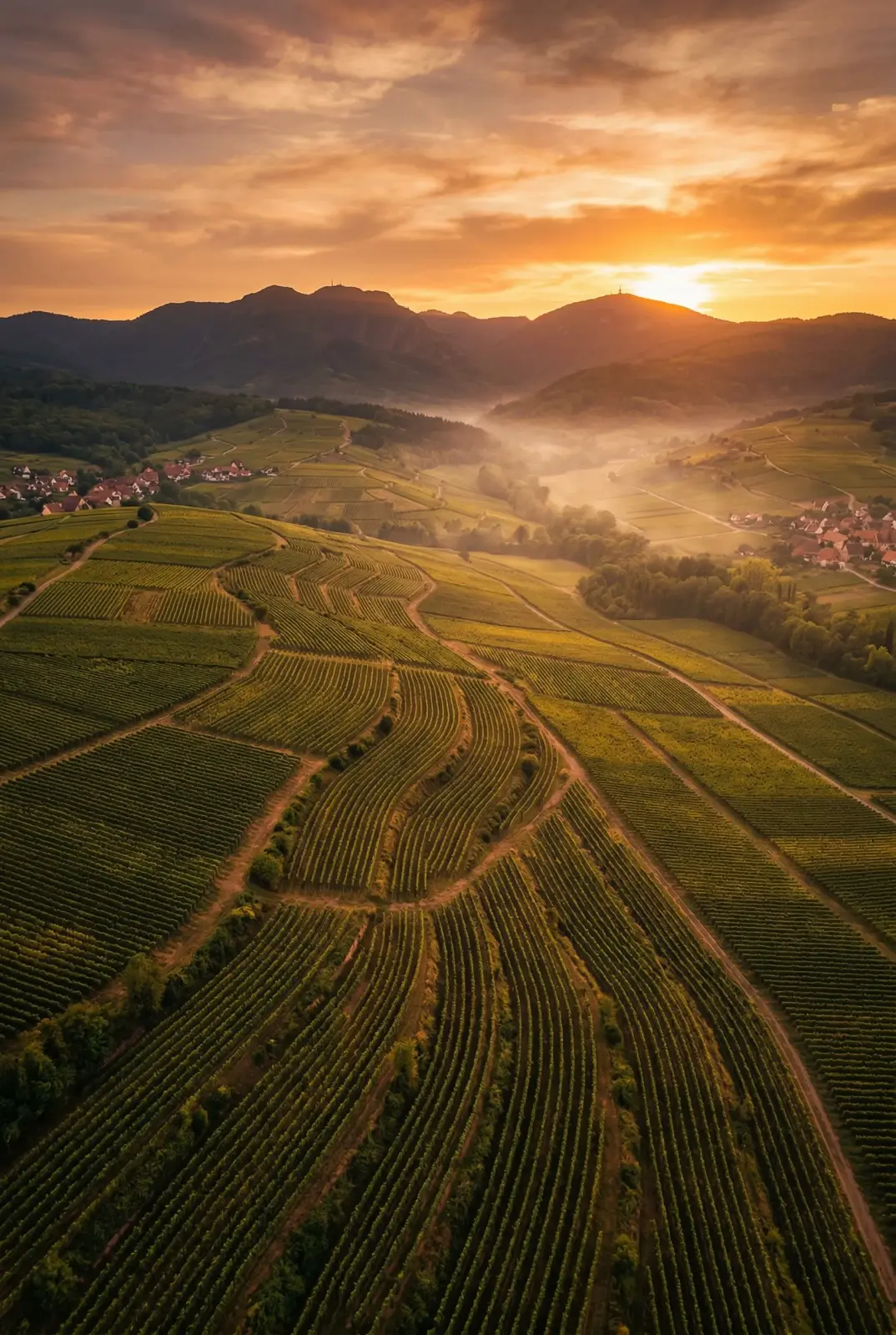
When Is the Best Time to Visit the Alsace Wine Route
The ideal window to visit the Alsace Wine Route is from mid-September to late October: harvest season, mild weather, golden light on the vineyards and full winery availability. Late November to late December is the second peak, centered on the Alsatian Christmas markets.
Planning3 min read
How Many Days Do You Need for the Alsace Wine Route
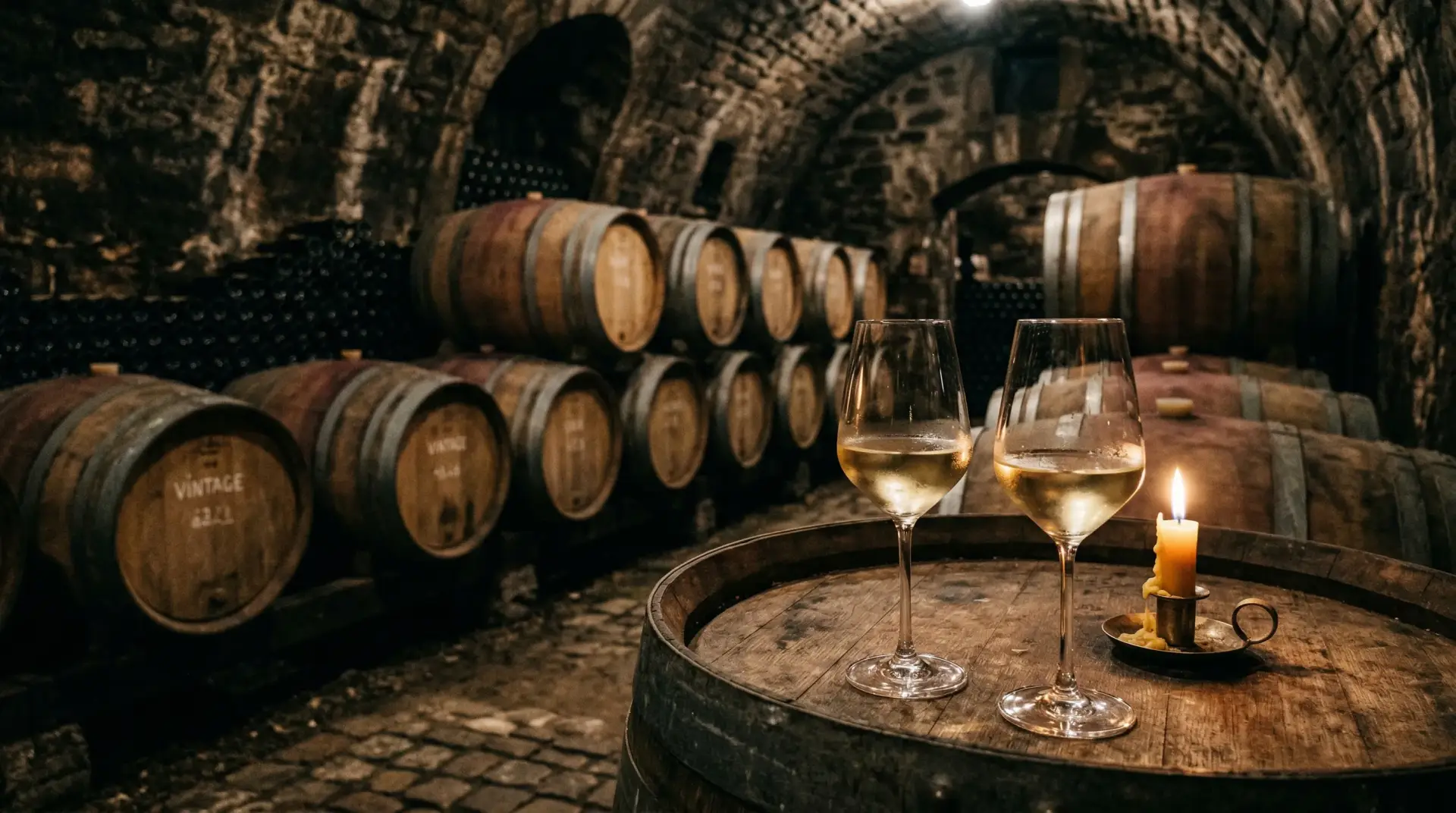
Three days is the ideal format for the Alsace Wine Route without rush: you cover the major villages from north to south with time to taste at three or four wineries. One day gives an overview, two days stay intense, and a full week opens complete exploration.
Planning3 min read
Where Does the Alsace Wine Route Start
The Alsace Wine Route officially starts at Marlenheim, in the Bas-Rhin, 20 minutes from Strasbourg, and ends at Thann in the Haut-Rhin, after 170 kilometers (105 miles) and 120 towns and villages. The direction is free: the most common entry is from Strasbourg or Colmar.
Wine and wineries3 min read
The Alsace Grand Crus: 51 Exceptional Appellations
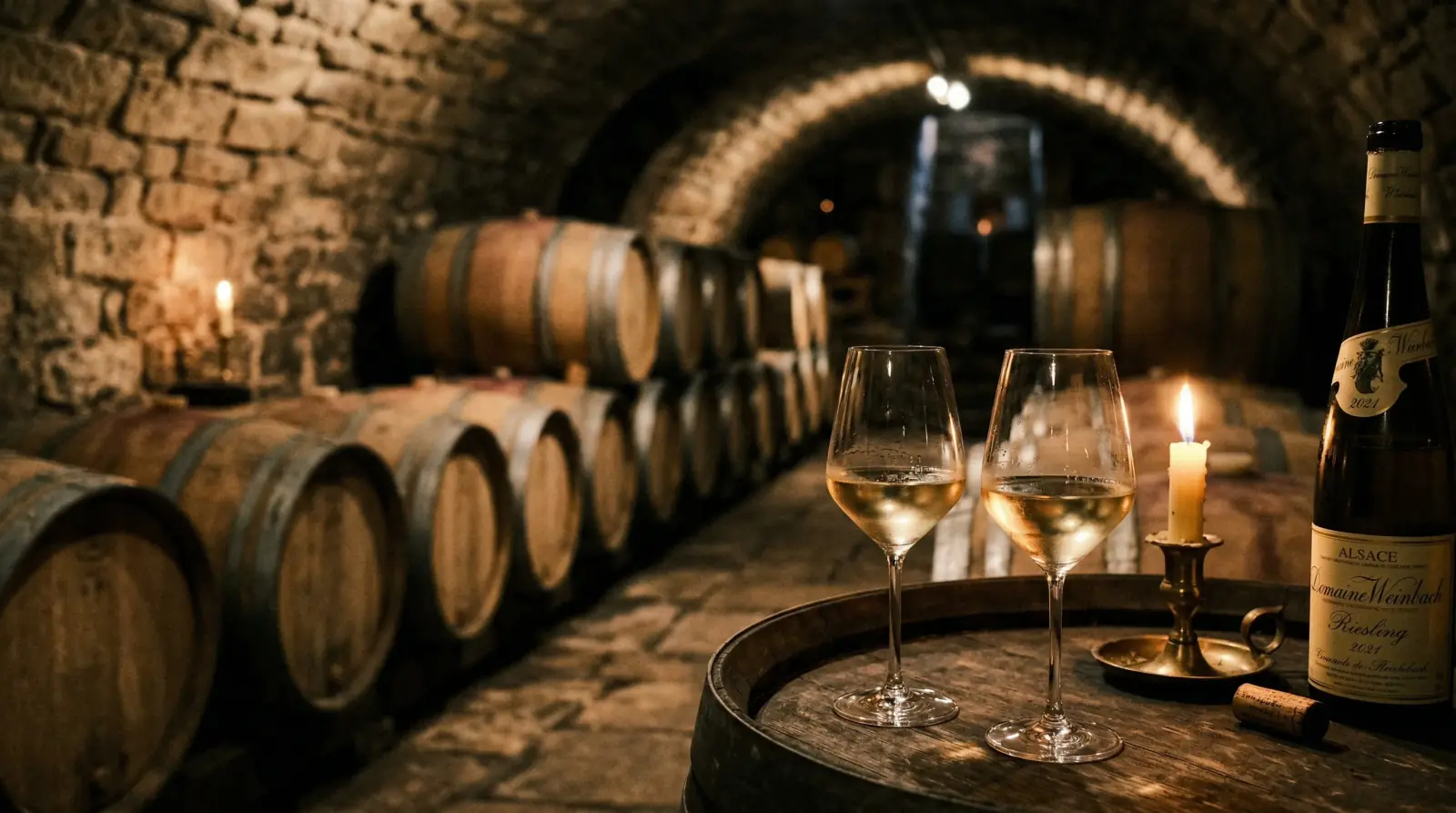
Alsace has 51 Grand Crus, all AOC, spread across the vineyard from Marlenheim to Thann. Four grape varieties are authorized (Riesling, Gewurztraminer, Pinot Gris, Muscat), with limited yields and strictly delimited terroir. The most famous are Schlossberg, Rangen, Brand, Schoenenbourg, Eichberg and Kessler.
Villages4 min read
What to See in Riquewihr, Kaysersberg and Eguisheim
Riquewihr, Kaysersberg and Eguisheim form the iconic triangle of the Alsace vineyard, all three classified or distinguished. Riquewihr holds the best-preserved Renaissance architecture, Kaysersberg combines a valley setting and a medieval castle, Eguisheim unfolds its concentric plan around an 8th-century castle. Plan half a day per village for a full visit.
Winter and Christmas3 min read
Christmas Markets and the Alsace Wine Route
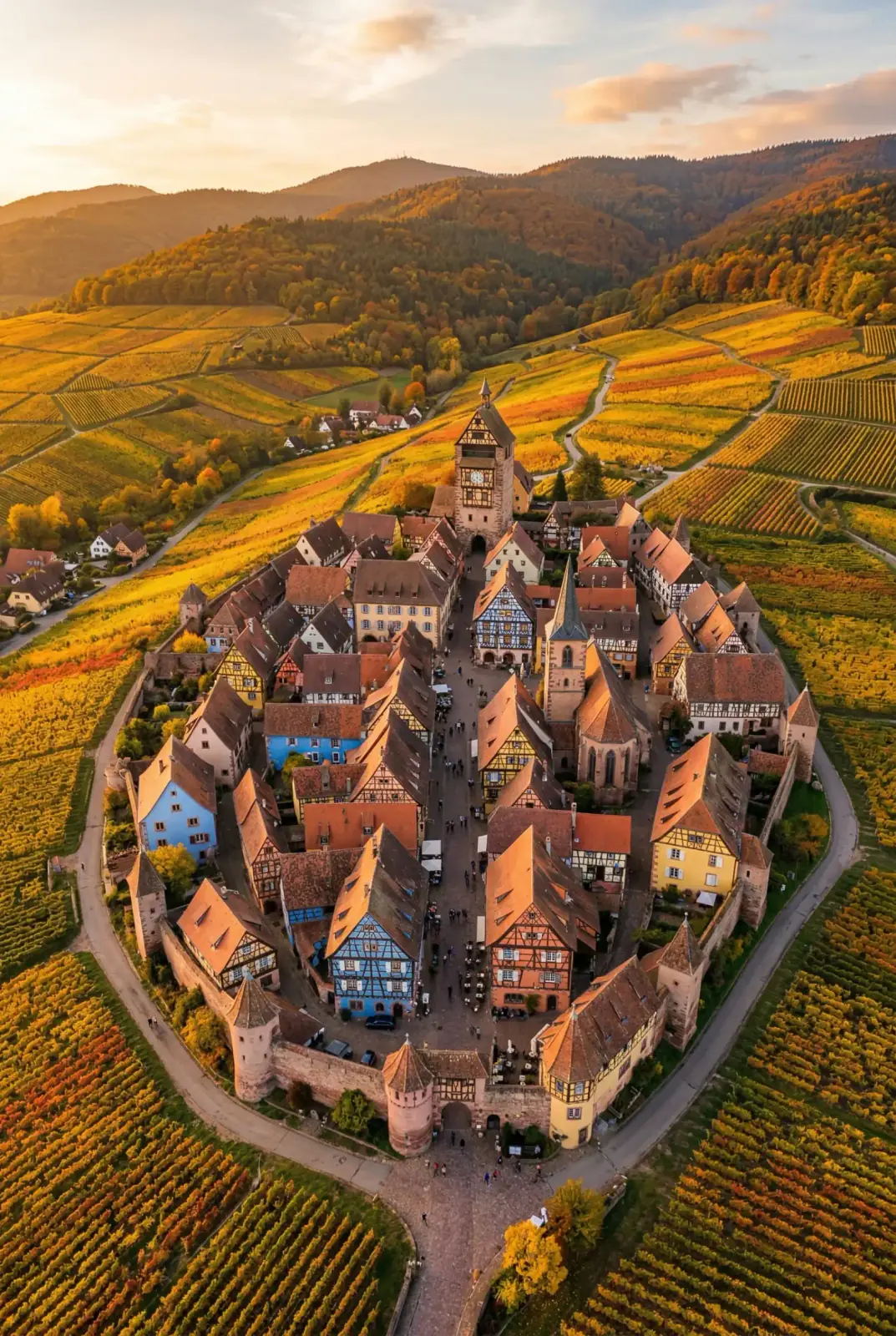
Alsace holds the most celebrated Christmas markets in France, from late November to late December. The most iconic are Strasbourg (Capital of Christmas), Colmar, Kaysersberg, Riquewihr, Ribeauvillé (medieval markets on the first two weekends of December) and Eguisheim. A private chauffeur avoids saturated parking and lets you enjoy mulled wine and Crémant without driving constraints.
Planning3 min read
Wine Route Tour from Strasbourg
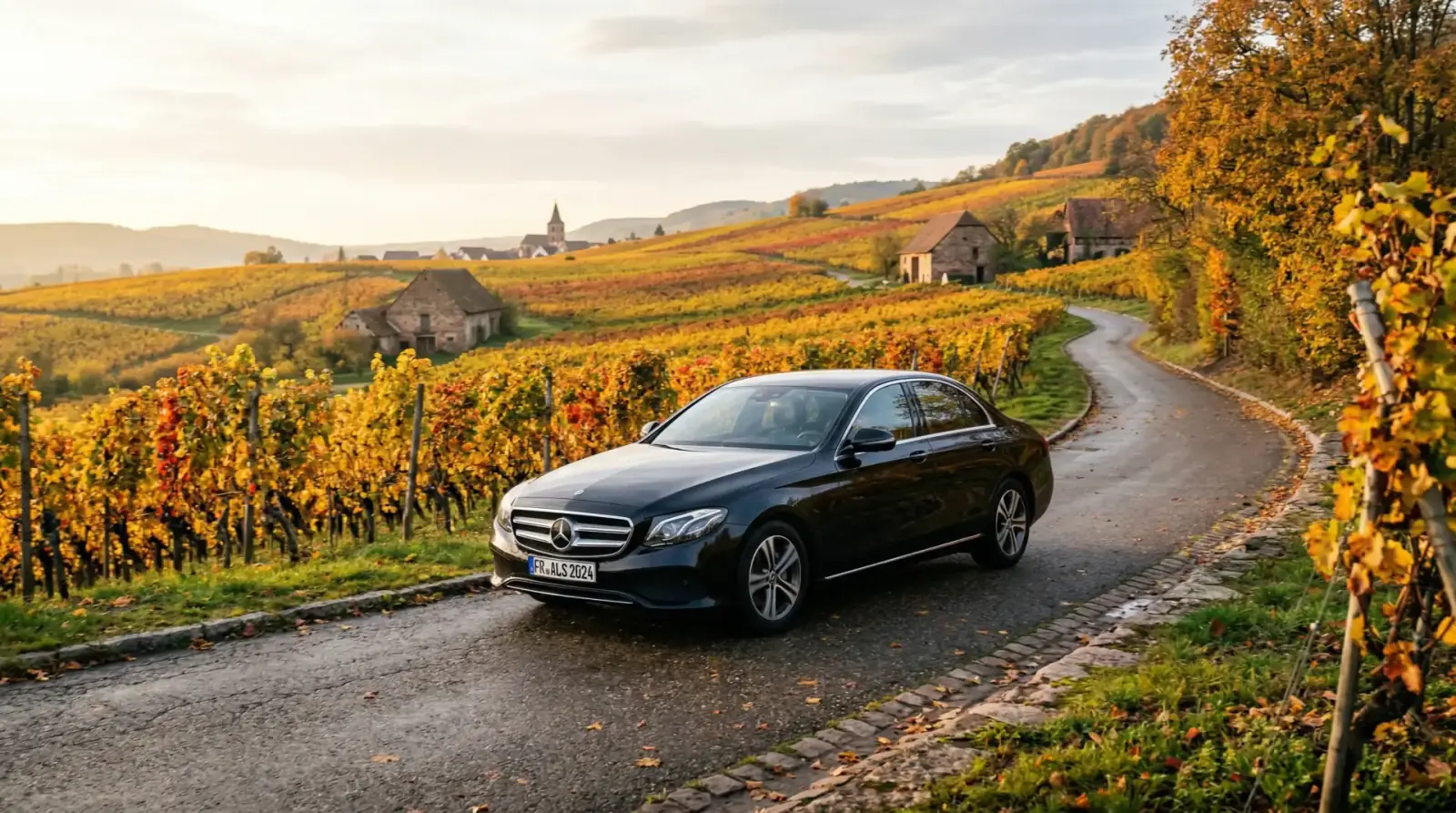
From Strasbourg, the Wine Route starts 15 minutes away via the A35 highway, at Marlenheim. Common tours target Obernai and the central sector (Ribeauvillé, Riquewihr, Kaysersberg) over 1 to 3 days. Pickup from Strasbourg airport (Entzheim) or any city hotel with no surcharge when booking a private chauffeur.
Planning6 min read
Wine Route Tour from Colmar
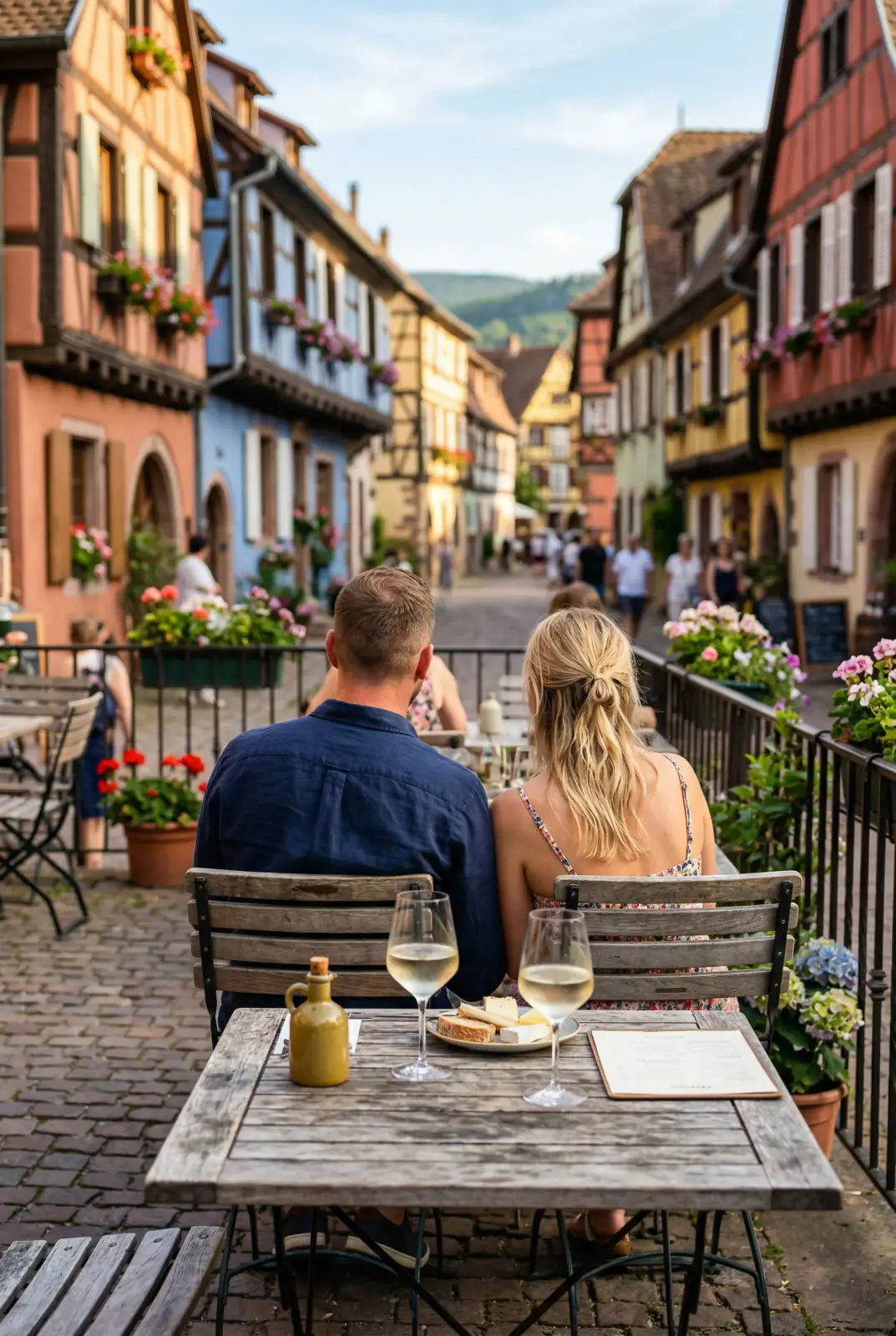
Colmar is the most central base on the Alsace Wine Route: Eguisheim and Turckheim are 15 minutes away, Kaysersberg, Riquewihr and Ribeauvillé under 25 minutes. A half-day covers two villages with a tasting, a full day four or five. Private chauffeur pickup at Colmar station or your hotel, with an approach charge of EUR 180 to 290 depending on duration and vehicle.
Planning4 min read
Strasbourg Airport (Entzheim) to the Wine Route Transfer
Strasbourg airport (Entzheim) (SXB) is 12 km southwest of Strasbourg and 5 minutes from FJ13's office. Marlenheim, the northern gateway to the Wine Route, is reachable in 20 minutes by car. Four options exist: private chauffeur, taxi, car rental, TER shuttle with connection.
Planning5 min read
Transfer from Basel-Mulhouse EuroAirport to the Wine Route
Basel-Mulhouse-Freiburg EuroAirport (BSL) is the second air gateway to Alsace, 40 minutes from the southern Wine Route (Thann) and 50 minutes from Colmar. Take the French exit for your pickup. The private chauffeur waits at the exit with flight tracking and 60 minutes of free waiting time; the approach from the Strasbourg area adds EUR 300 to 600 depending on duration and vehicle. The smartest itinerary enters through the southern vineyard and works its way up to Colmar.
Planning5 min read
Karlsruhe/Baden-Baden Airport to the Alsace Wine Route
Karlsruhe/Baden-Baden airport (FKB), a Ryanair base on the German side of the Rhine, sits about 40 minutes from the northern Wine Route: A5 southbound, the Strasbourg bridge, then Marlenheim or Obernai. The private chauffeur waits at the terminal exit with flight tracking and 60 minutes of free waiting time; a mileage surcharge, quoted before booking, applies to pickups outside Entzheim. The natural itinerary enters through the northern vineyard and works its way down to Colmar.
Planning3 min read
Doing the Alsace Wine Route as a day trip from Strasbourg
Yes, the Wine Route works as a day trip from Strasbourg in the form of a dense 8-hour tour, 3 iconic villages and 2 tastings. Ideal format for a first taste or a business traveler with one free day. Budget: from EUR 640 in a sedan for 1 to 3 passengers.
Planning4 min read
Doing the Alsace Wine Route as a family with children
Yes. The Wine Route works well for families: playful medieval villages, stork reserves, animal parks, short vineyard trails. The chauffeur provides baby seats and boosters at no extra charge. Suitable itinerary: 5 to 6 hours with 2 villages, 1 child-focused activity, lunch in a winstub.
Wine and wineries4 min read
Best Wineries and Tasting Rooms to Visit in Alsace
The safe bets are spread by sector. Around Ribeauvillé and Riquewihr, historic houses such as Trimbach, Hugel & Fils and the Cave de Ribeauvillé. Around Colmar and Turckheim, terroir estates like Zind-Humbrecht. Everywhere, smaller family wineries. The right choice depends on your favorite grapes and the time you have.
Winter and Christmas3 min read
Alsace Wine Route in Winter or Rain: What to Do
The Wine Route works all year. In winter or rain, focus on indoor activities: tastings in vaulted cellars, Christmas markets from late November to late December, lunches in a winstub and vineyard museums. A private chauffeur avoids driving on wet or icy roads and drops you as close as possible.
Wine and wineries3 min read
How Many Wineries Can You Visit in One Day?
Three to four wineries a day is a reasonable pace on the Alsace Wine Route. Counting 45 to 90 minutes per tasting, travel between villages and a lunch break, a full day rarely allows more than four estates without sacrificing pleasure and attention.
Planning2 min read
Wine Route for Corporate Groups and Seminars
Yes. The Alsace Wine Route works well for seminars, team building and group events. The van carries up to 7 passengers, and several coordinated vehicles handle larger groups. FJ13 builds custom quotes and manages the logistics, from transfers to the tasting itinerary.
Wine and wineries3 min read
Do You Need to Book Winery Tastings in Alsace?
It depends on the winery. Major houses often welcome walk-ins on weekdays, but small family estates, weekends, groups or harvest time call for a booking. A private chauffeur arranges the appointments in advance and times the schedule for a smooth day.
Wine and wineries3 min read
The 7 Alsace Grape Varieties and Their Differences
Alsace grows seven main grapes: Riesling, Gewurztraminer, Pinot Gris, Pinot Blanc, Pinot Noir, Muscat and Sylvaner. Six make whites, from dry to sweet, and Pinot Noir makes the reds and rosés. Riesling is crisp and mineral, Gewurztraminer powerful and aromatic: the two most contrasting profiles.
Wine and wineries3 min read
Alsace White Wine: the Guide to Choosing Well
Over 90% of Alsace production is white wine, from the most taut dry style to late-harvest dessert wines. To choose well, look first at the grape variety, which sets the aromatic profile, then at the sweetness level, shown on labels since the 2021 vintage. Riesling and Sylvaner for dry, Gewurztraminer and Pinot Gris for more roundness, Crémant for bubbles.
Wine and wineries3 min read
Dry Alsace White Wine: Which Ones to Choose with Confidence
Four grape varieties give almost systematically dry whites in Alsace: Riesling, Sylvaner, Muscat and Pinot Blanc. For the others, check the label: since the 2021 vintage, the mention dry, off-dry, sweet or rich is mandatory. A dry wine contains less than 4 grams of sugar per liter.
Wine and wineries3 min read
Alsace Gewurztraminer: the Most Bewitching Grape
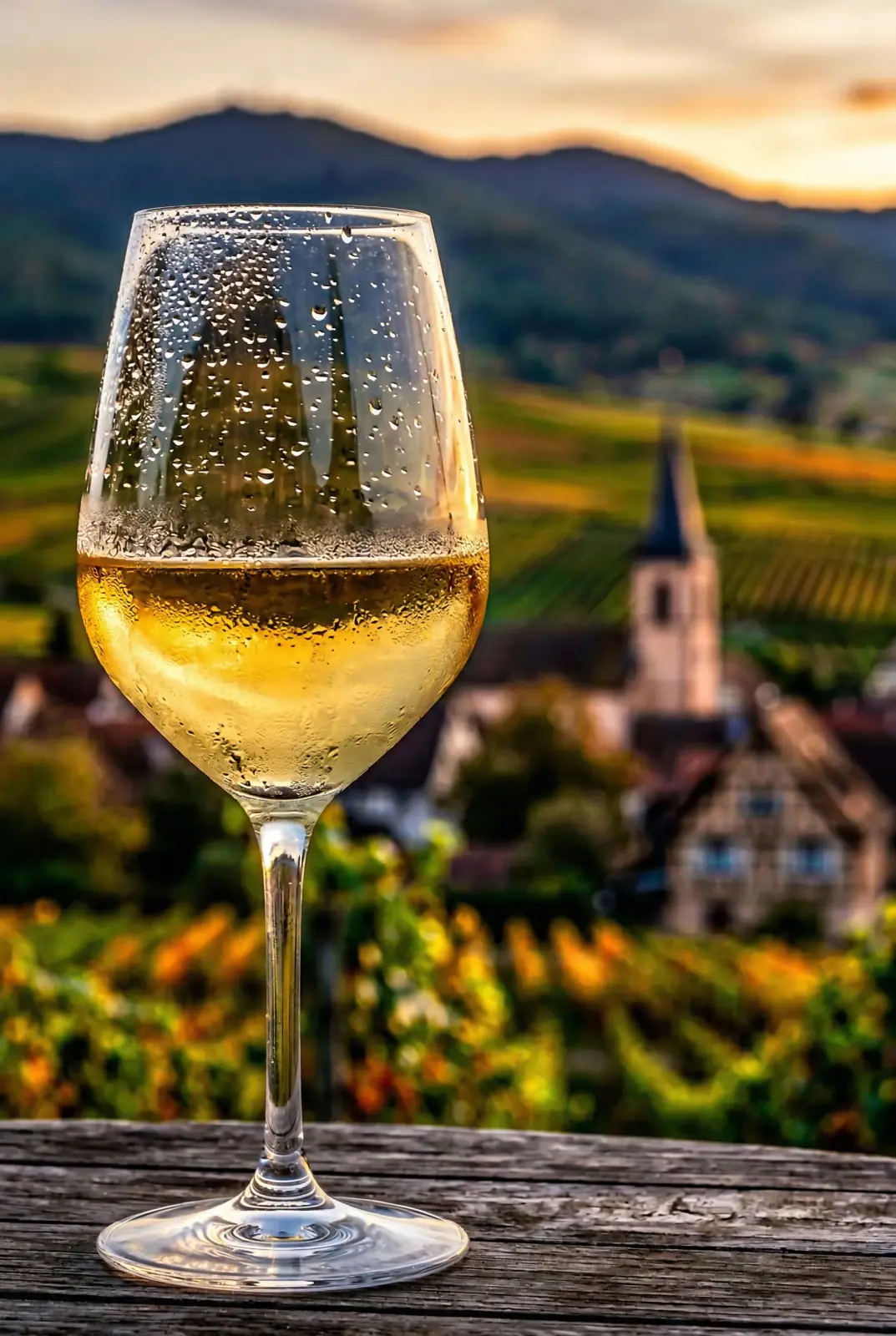
Gewurztraminer is the most aromatic grape of Alsace: lychee, rose, sweet spices, a signature you recognize instantly. It ranges from dry to the dessert-style Selection de Grains Nobles, with off-dry as the historic style. It is the natural partner of Munster cheese, foie gras and spicy cuisines, and one of the four noble grapes allowed in Grand Cru wines.
Wine and wineries3 min read
Sweet Alsace Wines: Understanding and Choosing Them
Sweet Alsace wines range from off-dry to luscious dessert styles. The two official mentions to know are Vendanges Tardives, from overripe grapes, and Selection de Grains Nobles, from botrytized berries sorted one by one. Four grapes qualify: Gewurztraminer, Pinot Gris, Riesling and Muscat. A sweet Gewurztraminer remains the most approachable entry point.
Wine and wineries4 min read
Orange Wine in Alsace: the Maceration Guide
Orange wine is a white wine made like a red: the skins macerate with the juice for days or months, giving an amber color, tannins and aromas of orange peel, tea and dried fruit. Alsace is particularly suited to it thanks to aromatic-skinned grapes like Gewurztraminer and Pinot Gris. A scene of winemakers, often organic or biodynamic, has turned it into a rising regional speciality.
Wine and wineries3 min read
The Most Famous Alsace Wines: the Ranking
The five most famous Alsace wines are Riesling, the benchmark dry white of the vineyard, Gewurztraminer, the aromatic one with lychee and rose notes, Crémant d'Alsace, France's leading sparkling wine outside Champagne, Pinot Gris, ample and gastronomic, and Muscat d'Alsace, dry and fragrant. Add the 51 Grands Crus, including Schlossberg and Rangen, the references among connoisseurs.
Wine and wineries3 min read
Edelzwicker: the Everyday Blend of Alsace
Edelzwicker is the traditional blended wine of Alsace: a dry, light white made from a mix of several white grapes of the AOC Alsace, with no imposed proportions. Served in carafes in winstubs and often sold in one-liter bottles, it is the everyday wine of Alsace. Gentil is its superior version, with at least 50% noble grapes vinified separately.
Wine and wineries3 min read
Biodynamic Wine in Alsace: the Pioneering Vineyard
Alsace is the French birthplace of biodynamics: the Eugene Meyer estate in Bergholtz has practiced it since 1969, a first in the national vineyard. The region now has one of the highest densities of Demeter or Biodyvin certified estates in France, including major names such as Zind-Humbrecht and Marc Kreydenweiss. Biodynamics goes further than organic: it treats the vineyard as a living ecosystem.
Experiences3 min read
Where to Eat on the Alsace Wine Route: the Best Tables
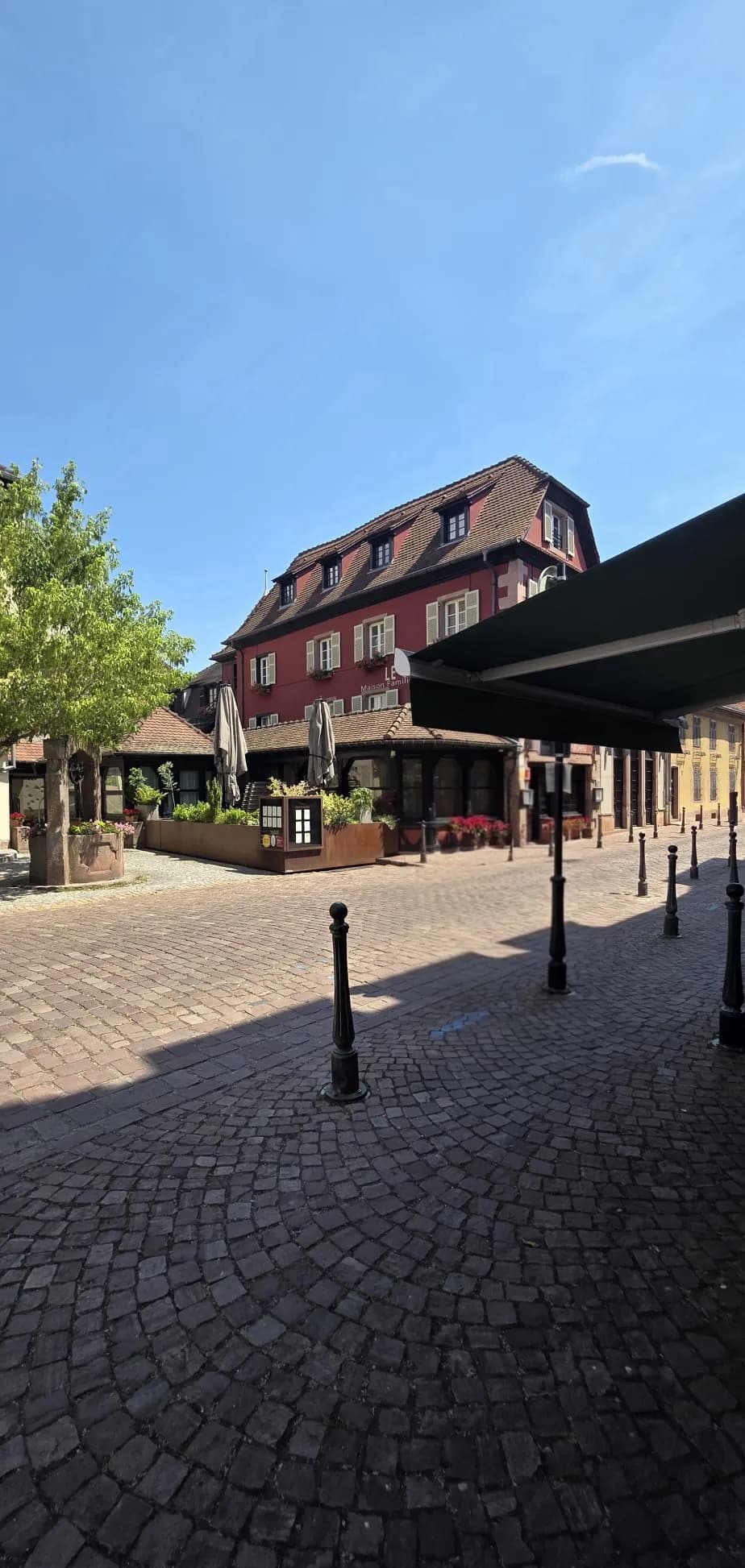
The Wine Route gathers three families of tables: the winstubs, Alsatian bistros serving sauerkraut and tarte flambee amid wood-paneled decor, the farm inns of the heights for farm produce, and a few great starred tables such as La Table d'Olivier Nasti in Kaysersberg or the Auberge de l'Ill in Illhaeusern. Book lunch in season: the villages are in high demand.
Experiences3 min read
Wine Fairs and Wine Festivals in Alsace: the Calendar
Alsace celebrates its wine all year round: the Colmar Wine Fair in late July and early August, the region's largest, village festivals almost every summer weekend, the harvest festivals in Barr and Obernai in October, and the Christmas markets at the end of the year. Exact dates change every year: check them before booking your trip.
Experiences4 min read
Route des Cretes and Wine Route: Combining Both in One Day
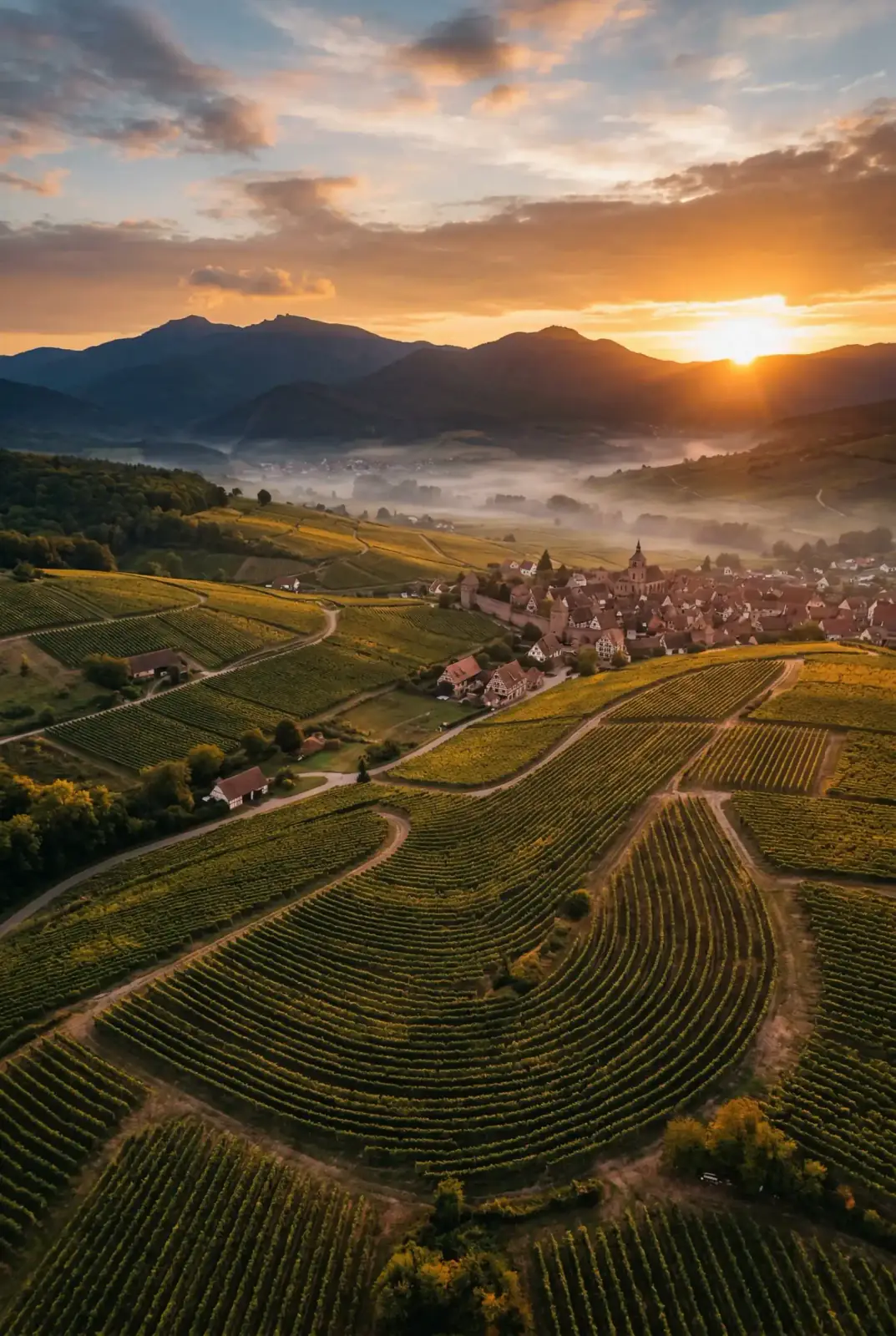
Yes, and it makes one of the finest days in Alsace: the Route des Cretes runs along the Vosges summits for about 77 kilometers between Cernay and Sainte-Marie-aux-Mines, less than an hour from the vineyard. The right format: the Grand Ballon panoramas and a marcaire lunch in a farm inn in the morning, then the descent to the wine villages for two tastings in the afternoon.
Wine and wineries3 min read
Alsace Vineyard and Wine Museum: the Visitor Guide
Housed in the castle of the Confrerie Saint-Etienne in Kientzheim, between Kaysersberg and Riquewihr, the Alsace Vineyard and Wine Museum gathers monumental wine presses, cooperage tools and objects of winegrowing life. The visit takes about an hour, open in season, and combines ideally with the wineries of the neighboring Schlossberg and a stroll through Kaysersberg.
Experiences3 min read
The Alsace Wine Route by Bike: Itineraries and Advice
The Alsace Vineyard Cycle Route runs alongside the Wine Route for about 140 signposted kilometers between Marlenheim and Thann, on small roads and vineyard paths. Electric bikes, for hire in most stage towns, put the ride within everyone's reach. Allow three to five days for the full route, or one day on a section such as Bergheim, Ribeauvillé, Riquewihr and Kientzheim.
Villages5 min read
Visiting Kaysersberg: what to see and taste
Kaysersberg, voted France's Favorite Village in 2017, is a medieval town on the Alsace Wine Route, 12 km northwest of Colmar. You can tour its imperial castle, the Sainte-Croix church and the half-timbered old town in about 2 hours, or half a day with a tasting of Grand Cru Schlossberg. With no train station, access is by car or private chauffeur.
Villages5 min read
Visiting Eguisheim: What to Do and Where to Taste
Eguisheim, voted France's Favorite Village in 2013 and listed among the Most Beautiful Villages of France, coils in concentric circles around its castle, 7 km southwest of Colmar. Its flowered lanes take about 1.5 hours to explore, half a day with a tasting on the Eichberg and Pfersigberg grands crus. Birthplace of Pope Leo IX, it has no train station: car or private driver.
Villages5 min read
Visiting Riquewihr: What to Do and Where to Taste
Riquewihr, listed among the Most Beautiful Villages of France, came through the wars unscathed: its main street lines up houses from the 15th to 18th centuries below the Dolder, a belfry from 1291. 13 km from Colmar, the town is visited in 2 hours, half a day with a tasting on the Schoenenbourg and Sporen grands crus, at Hugel or Dopff. Pedestrian center: park outside or come with a private driver.
Villages5 min read
Visiting Ribeauvillé: What to Do and Where to Taste
Ribeauvillé, overlooked by its three castles, lines its Grand Rue between the Butchers' Tower and the wineries of the great Riesling houses: Trimbach, Louis Sipp and the oldest cooperative winery in France. 17 km north of Colmar, the town is visited in 2 hours, half a day with the climb to Saint-Ulrich castle or a tasting on the Kirchberg, Geisberg and Osterberg grands crus. No train station: car or private driver.
Villages5 min read
Visiting Obernai: What to Do and Where to Taste
Obernai, 30 km southwest of Strasbourg, is the great northern stop of the Wine Route: a Market Square with colorful facades, the Kapellturm belfry, complete ramparts and the Schenkenberg vineyard on the heights. Birthplace of Saint Odile, patron saint of Alsace, it is visited in 2 hours, a full day with Mont Sainte-Odile added. A rare privilege: Obernai has a train station, 35 minutes from Strasbourg by regional train.
Villages5 min read
Visiting Thann: What to Do and Where to Taste
Thann marks the southern end of the Alsace Wine Route, 25 minutes from Mulhouse. You visit the Saint-Thiebaut collegiate church, a Gothic jewel whose spire is reputed the finest in Alsace, and the Witch's Eye on the Engelbourg ruins. Above the town, the Rangen, Alsace's only volcanic grand cru, produces some of the most singular wines in France. A rare asset: Thann has a train station.
Villages6 min read
Visiting Turckheim: what to see and taste
Turckheim is a fortified town on the Alsace Wine Route, 7 km west of Colmar, known for its night watchman's round, every evening at 10 PM from May to October, and for the Brand Grand Cru overlooking the village. The center takes 1 hr 30 min to visit, half a day with the vineyard trail and a tasting. It is one of the few wine villages reachable by train: 10 minutes by TER from Colmar.
Villages8 min read
Haut-Koenigsbourg from Strasbourg: day trip and visit
Haut-Koenigsbourg castle, perched about 750 m above the Alsace plain in Orschwiller, is the most visited monument in the region. A medieval fortress rebuilt in the early 20th century under Kaiser Wilhelm II, it takes 1.5 to 2 hours to visit. Access is via a mountain road from Sélestat or Saint-Hippolyte, with tight parking in high season: a chauffeur drop-off at the entrance is the most comfortable option. From Strasbourg, allow about an hour by road on the A35, or the regional train to Sélestat followed by a seasonal shuttle or a taxi: a full day leaves room for a village and a tasting.
Villages7 min read
Riquewihr in One Day: The Ideal Itinerary
One day is enough to take Riquewihr's measure: ramparts, Dolder and lanes in the morning before the groups arrive; a late-morning tasting at a historic house such as Hugel or Dopff au Moulin; a winstub lunch; then the vineyard trail and viewpoints over the Schoenenbourg in the afternoon. Parking is difficult at the village gates, so the most comfortable formula remains a private driver.
Wine and wineries6 min read
Grape Harvest in Alsace: Dates, Atmosphere, Where to Go
The Alsatian harvest runs from late August, starting with grapes for Crémant, to mid-October for the still white varieties, then into October and November for late harvest wines and noble grape selections. It is the liveliest period on the Wine Route: book your tour and tastings early, preferably on a weekday.
Planning6 min read
Alsace Wine Route in 2 Days: Detailed Itinerary
Day 1: leave Strasbourg heading north to south through Obernai, Barr or Mittelbergheim, Haut-Koenigsbourg castle and Ribeauvillé at the end of the day. Overnight in Riquewihr or Colmar. Day 2: Riquewihr at dawn before the coaches, Kaysersberg, a winstub lunch, Eguisheim, then finish in Colmar. Around 130 kilometers of driving in total.
Villages5 min read
Visiting Colmar: What to See in One Day
Colmar's old town is walkable in half a day: Little Venice, the Tanners' quarter, the Koifhus, the Pfister house and Saint-Martin collegiate church all sit within 800 meters. Allow a full day if you add the Unterlinden museum and its Issenheim altarpiece. The town itself has no vines: the first slopes begin at Eguisheim and Turckheim, fifteen minutes away.
Planning5 min read
Alsace Wine Route Map and Real Distances
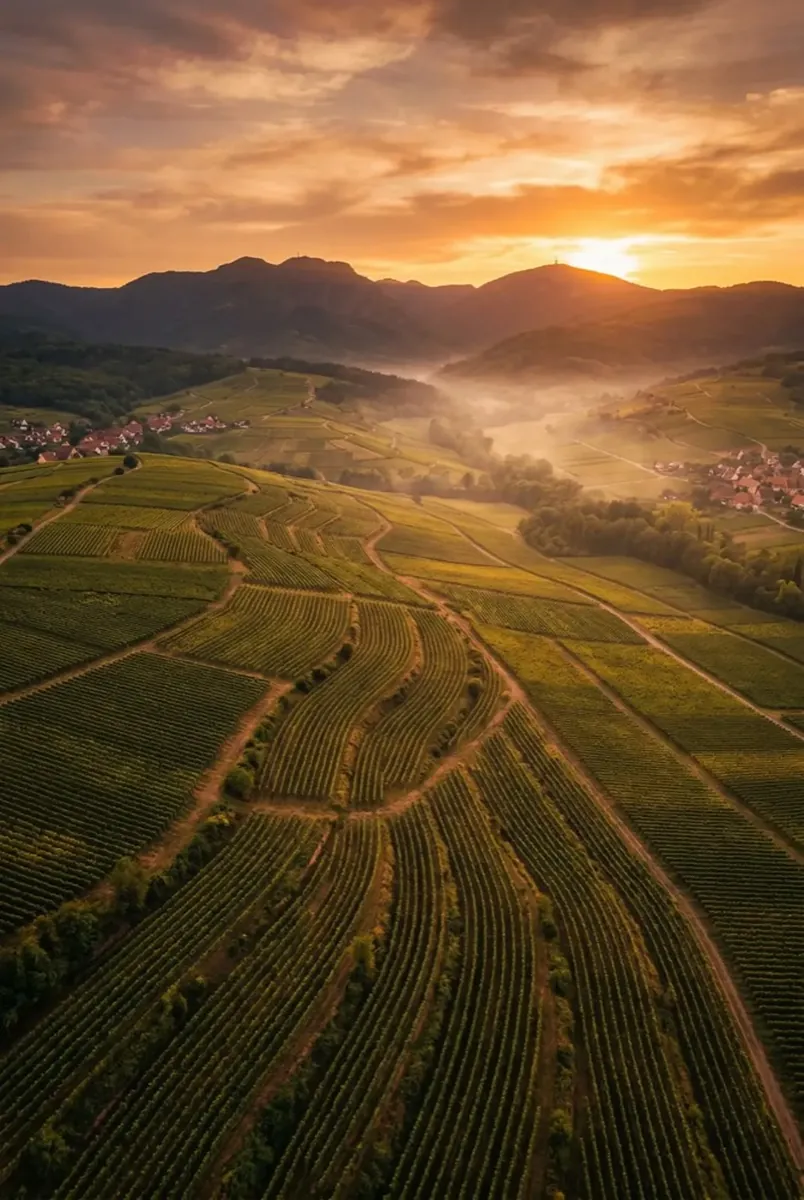
The Alsace Wine Route runs 170 kilometers (105 miles), from Marlenheim in the north to Thann in the south, through 120 wine-growing communes. Nobody drives it in one go: the most visited villages sit 5 to 15 kilometers apart, ten to twenty minutes of driving, and it is the time spent in the villages, not on the road, that fills the day. Three sections structure it, each fitting into half a day.
Experiences4 min read
What to Do in Alsace: the Essentials by Vineyard
Alsace fits into 190 kilometers from north to south: from any point in the vineyard, everything is under an hour away. Four families of activities share a stay: the wine villages and their wineries, the two cities of Strasbourg and Colmar, the castles and the ridge road, and whatever the season adds, harvest in September, Christmas markets in December. The rest is a matter of available time.
Winter and Christmas5 min read
Strasbourg Christmas Market: Dates, Sites and Access
Strasbourg's Christkindelsmarik, held since 1570, is the oldest Christmas market in France. More than 300 chalets spread across eight sites in the center, from Place Broglie to the Great Tree on Place Kleber. Allow three hours, and arrive by tram rather than car: the center is closed to traffic during Advent.
Winter and Christmas4 min read
Colmar Christmas Market: The Six Markets and Dates
Colmar holds six Christmas markets inside an old town you can cross in ten minutes on foot, from November 24 to December 29, 2026. Each has a theme: crafts, food, children, medieval. The most photographed is Little Venice, along the lit canal. Two to three hours are enough to see them all.
Winter and Christmas4 min read
Kaysersberg Christmas Market: Dates and Access
The Kaysersberg Christmas market runs from November 27 to December 20, 2026, on Fridays, Saturdays and Sundays only, from 10 to 8. Around thirty chalets bring together craftspeople vetted each year by the organizing association, in the Cour de l'Arsenal and behind Sainte-Croix church. The center is pedestrianized: three park-and-ride sites serve the village by shuttle.
Winter and Christmas4 min read
Ribeauvillé Medieval Christmas Market: 2026 Dates
Ribeauvillé's medieval Christmas market runs on two weekends only, on December 5, 6, 12 and 13, 2026, from 10 to 7 on Saturdays and 10 to 6 on Sundays. The old town is closed to traffic by concrete blocks across those four days. A park-and-ride with a free shuttle operates outside the town.
Winter and Christmas3 min read
Riquewihr Christmas Market: Dates, Hours, Access
The Riquewihr Christmas market runs from November 27 to December 20, 2026, every day, from 10 to 6:30 on weekdays, until 8 on Fridays and 7 at weekends. Chalets are spread through the whole medieval center, inside the ramparts. No vehicle enters the walls: parking is outside.
Winter and Christmas4 min read
Which Christmas Market to Choose in Alsace
For a first visit, Colmar offers the best balance of density and ease, with six markets in a compact center. Strasbourg for scale, Kaysersberg for vetted crafts, Ribeauvillé for medieval re-enactment, Riquewihr for midweek travel, Eguisheim for quiet, Obernai and Colmar for markets still open after Christmas.
Winter and Christmas5 min read
Alsace Christmas Markets Without a Car
The train serves Strasbourg, Colmar, Sélestat, Obernai and Mulhouse, all of which have a market. No major vineyard village has a station, but a network of Christmas shuttles links Colmar station to Kaysersberg, Riquewihr, Ribeauvillé and Eguisheim from November 27 to December 20, 2026. With night falling around ten to five, it is the last return that constrains the day, not the outward journey.
Winter and Christmas4 min read
Where to Park at the Alsace Christmas Markets
No major Alsatian market can be reached by car right up to the chalets: pedestrian centers in Colmar and Riquewihr, a security cordon in Strasbourg, concrete blocks in Ribeauvillé. Three systems coexist: park-and-ride with shuttle, an outer parking lot finished on foot, and drop-off. Saturation comes between 10 and 11 in the morning on December Saturdays.
Winter and Christmas3 min read
Eguisheim Christmas Market: Dates, Hours, Access
The Eguisheim Christmas market runs from November 27 to December 30, 2026, on Place du Chateau Saint-Léon, with around thirty local stallholders. It closes on December 24, 25 and 26 and reopens on the 28th. Opening hours change with the day, and become daily from December 15. It is the only vineyard village served every day by the Christmas shuttle from Colmar station.
Winter and Christmas3 min read
Obernai Christmas Market: Five Squares, 2026 Dates
The Obernai Christmas market gathers 45 chalets across five squares of the old town, from November 27 to December 31, 2026. It is the latest-closing market in Alsace and one of the few running to New Year's Eve. Focused on food and crafts, it is reachable by train from Strasbourg in about thirty minutes.
Winter and Christmas3 min read
Mulhouse Christmas Market and Its Christmas Fabric
The Mulhouse Christmas market runs on Place de la Reunion from November 20 to December 27, 2026, with 90 chalets. Its distinctive feature is the Christmas fabric: since 1998 a new textile pattern has been created every year, dressing the chalets and streets and sold by the meter. No other French market works this way. It is also the first to open in Alsace.
Winter and Christmas4 min read
Alsace Christmas Markets with Children
Colmar is the only one with a market designed for children, at Little Venice, with a mechanical nativity scene and rides. Mulhouse is the easiest with a stroller, its square being flat. The vineyard villages are the hardest: sloping cobbles, narrow lanes and no covered shelter. Two markets a day at most with young children.
Winter and Christmas4 min read
Alsace Christmas Markets from Germany and Switzerland
Freiburg im Breisgau is about an hour from Colmar, Basel thirty minutes from Mulhouse, Offenburg thirty minutes from Strasbourg. A day return is therefore realistic. Coming back into Switzerland, the customs allowance is 150 francs per person per day and 5 liters of wine under 18 degrees: six 75-centiliter bottles stay within that limit.
Winter and Christmas4 min read
Alsatian Christmas Specialities: What to Taste
Six specialities shape Christmas in Alsace: bredele, small cookies in dozens of recipes; the mannele, a brioche figure eaten on December 6; gingerbread, whose capital has been Gertwiller since 1768; berawecka, a dried-fruit loaf; mulled wine, often made with white wine in Alsace; and Christmas beer, brewed for the season.
Winter and Christmas4 min read
Alsace in Winter, After the Christmas Markets
Once December 31 has passed, the markets are gone and Alsace enters its real low season, from January to March. This is the pruning season, the time when growers receive visitors without crowds, the season of carnival in February and of the winstubs. It is also when several estates and restaurants take their annual break: check before you travel.
Planning5 min read
Private Alsace Wine Tour from a Rhine River Cruise
Work backward from the all-aboard time printed in your ship's daily program: subtract a safety margin, the drive back and the time you want in each village. With a private driver, a Kehl or Strasbourg call fits Obernai and Barr comfortably, and a Breisach call fits Colmar plus one or two villages such as Eguisheim or Riquewihr. One port call will not cover the whole Wine Route, so choose fewer stops and enjoy them.
Planning5 min read
Paris to the Alsace Wine Route by TGV: Practical Guide
TGV trains leave from Paris Gare de l'Est: about 1 hr 46 to Strasbourg and around 2 hr 30 to Colmar. A same-day round trip works but leaves little time on the ground, and one night on site changes the day. A private driver can meet you off the train and take you straight to the vineyard.

Planning5 min read
Tipping a Private Driver in France on a Wine Tour
No, a tip is never required. If you enjoyed your day, many guests leave the driver 5 to 10 percent of the tour price in cash at the end of the day, which is a free gesture and not a rule. Restaurant prices already include service, and you do not tip after a paid tasting at a winery: buying a bottle is the usual thank-you.
Planning5 min read
Bringing Alsace Wine Home: Customs and Packing
Yes, within the allowance of your home country. For the United States, U.S. Customs and Border Protection (CBP) lets an adult aged 21 or older include one liter of alcohol in the returning-resident exemption for personal use, which is one standard 750 ml bottle, and the law of the state where you arrive applies. Wine for personal use moves freely inside the EU, while the UK and Switzerland set their own limits. Pack bottles in checked luggage, never in the cabin, and buy at the end of the day.
Planning5 min read
Where to Stay on the Wine Route: Colmar or Strasbourg
For one to three nights, Colmar is the most practical base: Eguisheim is 15 minutes away, Kaysersberg and Riquewihr 20 minutes. Choose Strasbourg if you arrive by TGV or at Strasbourg airport (Entzheim), or if you want a big city to explore in the evening; Riquewihr is then 55 minutes away. A village is the quietest choice, with shorter evenings and fewer restaurants. Whichever you pick, a private driver can collect you at your hotel and drop you in another town at the end of the day.
Planning5 min read
Zurich or Frankfurt Airport to the Alsace Wine Route
From Zurich, Colmar is about 155 km (95 miles) and two hours by road; from Frankfurt, Strasbourg is about 215 km (135 miles) and 2 hours 15 minutes. By train, each airport connects to Alsace with one change, most often in Basel or Karlsruhe, which suits one or two travelers with light luggage. A private transfer makes sense for a group, heavy luggage or a tired arrival after an overnight flight. The chauffeur can also meet you at Colmar or Strasbourg station.