Experiences4 min read
Can you combine the Route des Cretes and the Wine Route in one day?
Updated on
In brief
Yes, and it makes one of the finest days in Alsace: the Route des Cretes runs along the Vosges summits for about 77 kilometres between Cernay and Sainte-Marie-aux-Mines, less than an hour from the vineyard. The right format: the Grand Ballon panoramas and a marcaire lunch in a farm inn in the morning, then the descent to the wine villages for two tastings in the afternoon.
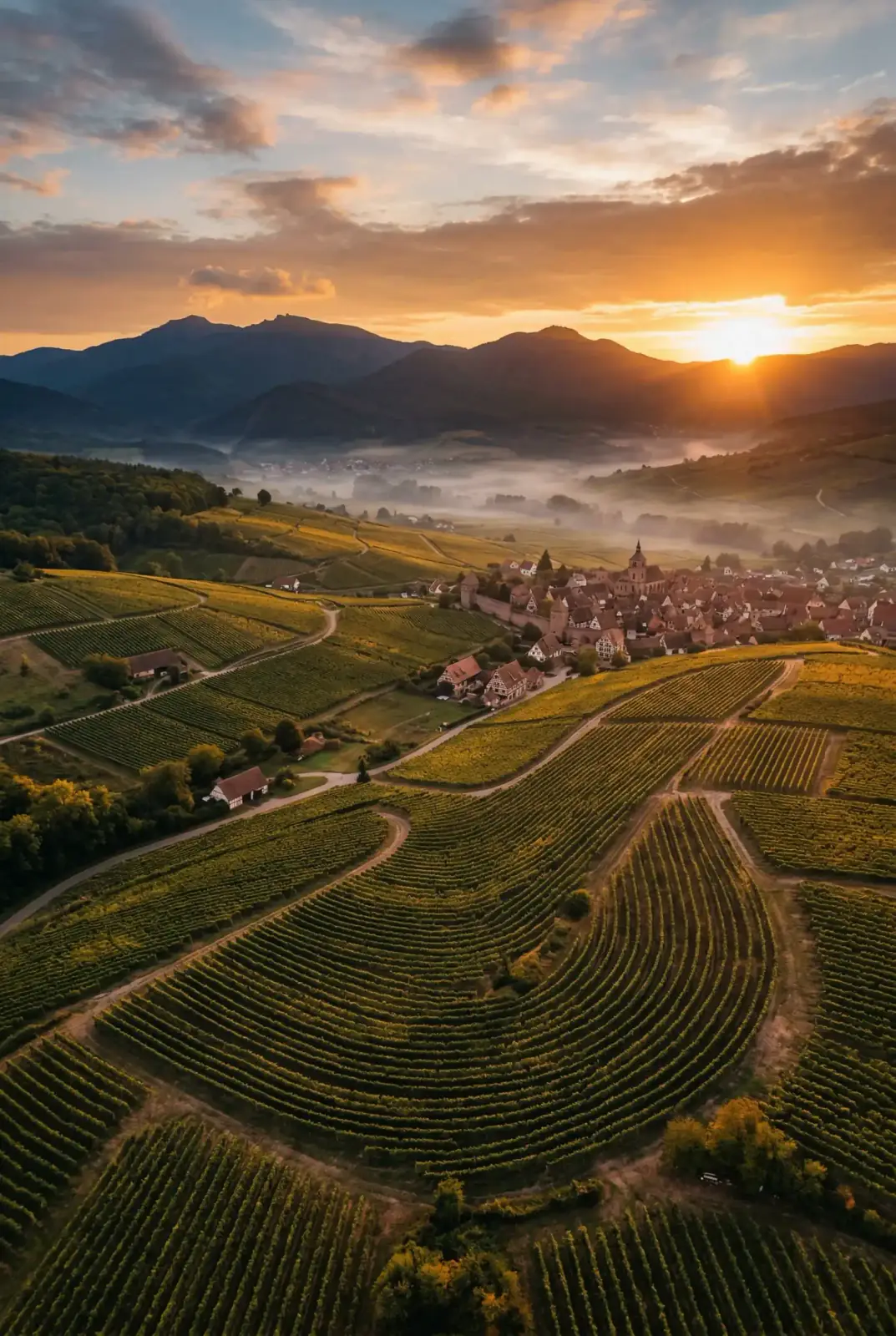
Alsace tells its story along two parallel lines: the Wine Route winding at the foot of the massif, and the Route des Cretes running along the summits, a thousand metres higher. Many visitors think they must choose. There is no need: the two combine in one day, with a striking contrast between high pastures in the morning and tasting cellars in the afternoon. Here is how to build this mountain-and-vineyard day, and the mistakes to avoid.
The Route des Cretes: 77 kilometres on the roof of the Vosges
Cut through during the First World War to supply the front line, the Route des Cretes links Cernay to Sainte-Marie-aux-Mines along the summit line. Its highlights: the Grand Ballon, the highest point of the Vosges at 1424 metres with a view reaching the Alps on clear days, the Hohneck and its high pastures, the Col de la Schlucht, and the Vieil Armand, a national memorial of the Great War. Along the way, the farm inns serve the traditional marcaire meal: valley pie, roigebrageldi, Munster cheese and blueberry tart. Note: the upper section is closed to traffic in winter, generally from November to March depending on snow.
The right itinerary to see everything in a day
The most efficient direction starts in the mountains and ends in the vines:
- Morning: climb via Cernay or the Munster valley, stop at the Grand Ballon or the Hohneck for the panorama
- Noon: marcaire meal in a farm inn on the high pastures, the most authentic experience of the massif
- Early afternoon: descend via the Col de la Schlucht and the Munster valley towards Turckheim and Colmar
- Afternoon: two tastings in the vineyard villages, for example Turckheim then Eguisheim or Kaysersberg
- Southern alternative: Vieil Armand in the morning, then up the vineyard via Thann, Guebwiller and Soultzmatt
What this combination tells about the Alsace terroir
Pairing the two roads is not just about scenery: it explains why the vineyard exists. From the Grand Ballon, you see the mechanics with the naked eye: the Vosges barrier stops the rain coming from the west and makes the Alsace plain one of the driest areas in France, an ideal climate for the slow ripening of grapes. The vines you taste in the afternoon literally grow in the rain shadow of the summits you crossed in the morning. Few regions let you read the geography of their wine within the same day.
The traps to avoid and the question of the wheel
Three classic traps await this day. First: underestimating travel times, as mountain roads average 40 km/h, not 80. Second: the weather on the ridges, often in fog while the plain basks in sun, to be checked that very morning. Third: the driving, demanding in the mountains in the morning and incompatible with tastings in the afternoon. This is the typical tour where a private driver makes full sense: FJ13 handles the route, adapts it to the day's weather and lets you enjoy the hairpins as much as the glasses.
Frequently asked questions
How long does the Route des Cretes take?
Allow half a day to drive it with two or three panoramic stops and a farm-inn meal. The road itself is about 77 kilometres, but it is driven slowly.
Is the Route des Cretes open all year round?
No, its upper section is closed to traffic in winter, generally from November to March depending on snow. In spring and summer it is fully accessible; check the passes at the start and end of the season.
How far is the Route des Cretes from the Wine Route?
Less than an hour's drive: from the Col de la Schlucht, you reach Turckheim and the vineyard through the Munster valley in about 45 minutes, and the Vieil Armand is only 20 minutes from the vines of Thann.
What is a marcaire meal?
The traditional meal of the Vosges farm inns: valley pie, roigebrageldi, melting potatoes cooked with bacon, farmhouse Munster and blueberry tart. An institution to experience at least once.
Ready to plan your day?
Build your custom itinerary or browse our ready-to-book tours.