Experiences3 min read
How do you cycle the Alsace Wine Route?
Updated on
In brief
The Alsace Vineyard Cycle Route runs alongside the Wine Route for about 140 signposted kilometres between Marlenheim and Thann, on small roads and vineyard paths. Electric bikes, for hire in most stage towns, put the ride within everyone's reach. Allow three to five days for the full route, or one day on a section such as Bergheim, Ribeauvillé, Riquewihr and Kientzheim.
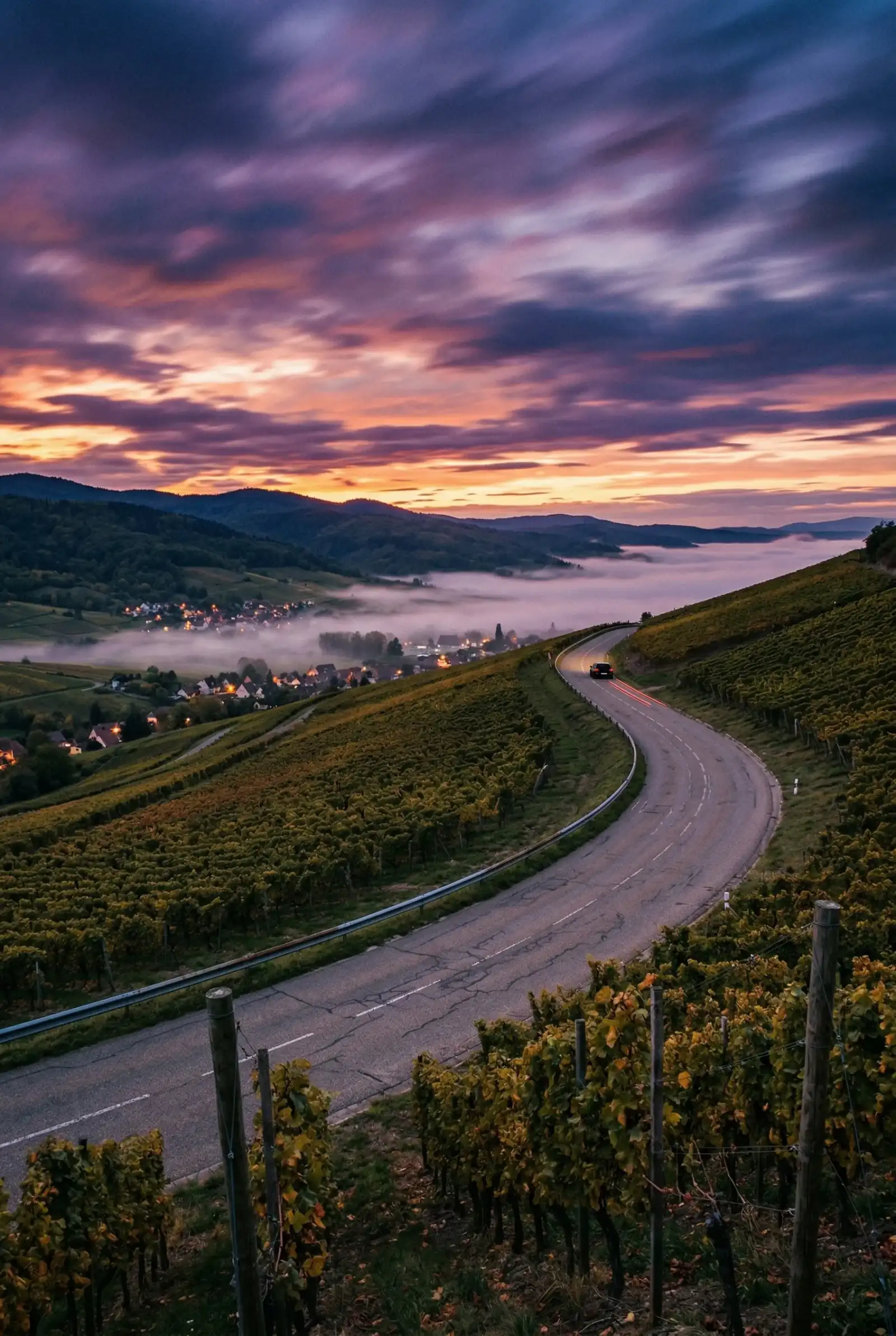
There is a way of experiencing the Wine Route that drivers will never know: at cycling pace, when the road becomes a path between the vine rows, when you hear the pruning shears snap in season and every village is earned with a short climb. The Vineyard Cycle Route makes the adventure accessible and signposted from end to end. Here are the itineraries, the finest sections, and our advice for combining pedals and tastings without compromise.
The Vineyard Cycle Route: the signposted thread
The vineyard's official cycling itinerary links Marlenheim to Thann over about 140 kilometres, parallel to the historic Wine Route. Signposted in both directions, it follows quiet minor roads, cycle paths and vineyard tracks hugging the slopes. The profile is broadly gentle, along the foothills, with short climbs to the perched villages: nothing daunting, especially on an electric bike, easily hired in Obernai, Barr, Ribeauvillé, Colmar or Guebwiller. The itinerary is part of EuroVelo 5, which crosses Alsace from north to south.
The best sections for a one-day ride
No need to aim for the full route to taste the best: these sections concentrate villages and scenery:
- Bergheim, Ribeauvillé, Hunawihr, Riquewihr, Kientzheim: the king section, 15 kilometres through the grands crus
- Obernai, Barr, Mittelbergheim, Andlau: the Bas-Rhin foothills, vines and villages of character
- Eguisheim, Husseren-les-Chateaux, Rouffach: viewpoints over the plain and the Haut-Rhin slopes
- Colmar towards Turckheim and the Munster valley: an easy start from the wine capital
- Soultzmatt, Guebwiller, Thann: the little-known south, down to the volcanic Rangen grand cru
Cycling and tasting: the rules of the game
The bicycle does not exempt you from drink-riding rules: cycling under the influence is punishable, and vineyard tracks demand attention. Good practice: taste in moderation and spit like the professionals, buy rather than drink, and keep the real tasting for the end of the day. On logistics, estates gladly ship your purchases or keep them until you come back motorised: do not load your panniers with bottles. Finally, book your e-bikes several days ahead in high season; demand outstrips supply on summer weekends.
The hybrid formula: pedal in the morning, ride in the afternoon
The finest day often combines both: a cycling section in the morning, when the light is soft and the roads quiet, then a driver taking over for the afternoon of cellars and villages. This formula solves the three limits of all-bike touring: fatigue that shortens the visits, bottles impossible to carry, and tastings held back by the ride home. FJ13 arranges this kind of day on request: drop-off at the start, pick-up at the end of the cycling section, and the rest of the programme by sedan or van, glasses and purchases included.
Frequently asked questions
How many days does the Wine Route take by bike?
Three to five days for the full route from Marlenheim to Thann, depending on your pace and tasting stops, with stages of 30 to 50 kilometres. One day is enough for a fine section such as Bergheim, Riquewihr and Kientzheim.
Is cycling the Wine Route difficult?
No, the profile is gentle overall: the route follows the foothills with short climbs to the villages. On an electric bike, the ride is accessible to any occasional cyclist, children included on the traffic-free sections.
Where can you hire an electric bike on the Wine Route?
In most stage towns: Obernai, Barr, Ribeauvillé, Riquewihr, Colmar, Eguisheim and Guebwiller all have e-bike rental shops. Book several days ahead in summer and for weekends.
Can you taste wine while cycling?
Only in moderation: cycling under the influence is punishable under the highway code. Spit during tastings, buy your bottles for later, or switch to a driver for the cellar part of the day.
Ready to plan your day?
Build your custom itinerary or browse our ready-to-book tours.