Wine and cellars6 min read
When does the grape harvest take place in Alsace and where can you experience it?
Updated on
In brief
The Alsatian harvest runs from late August, starting with grapes for Crémant, to mid-October for the still white varieties, then into October and November for late harvest wines and noble grape selections. It is the liveliest period on the Wine Route: book your tour and tastings early, preferably on a weekday.
For six to ten weeks, the Wine Route changes character: tractors loaded with grapes on the vineyard roads, presses running day and night, the smell of grape must drifting through the village lanes. Harvest time is when the Alsatian vineyard shows itself at work. Here is the harvest calendar, the areas where the atmosphere is strongest, what visitors can and cannot do, and how to organize a visit during the most in-demand period of the year.
The harvest calendar, from Crémant to noble grapes
There is no single date: each wine style has its own picking window, and the official start, the ban des vendanges, is set each year based on grape maturity checks. From one year to the next, the calendar can shift by two to three weeks, but the picking order always stays the same.
- Late August to early September: grapes for Crémant d'Alsace, picked first to preserve freshness and acidity.
- Mid-September to mid-October: still white varieties, from Sylvaner and Pinot Blanc to Riesling, then Gewurztraminer and Pinot Gris.
- October to early November: vendanges tardives, grapes left to overripen on the vine to concentrate sugars.
- Late October to November: selections de grains nobles, berries sorted pass by pass in the most favorable plots.
A Wine Route in full swing
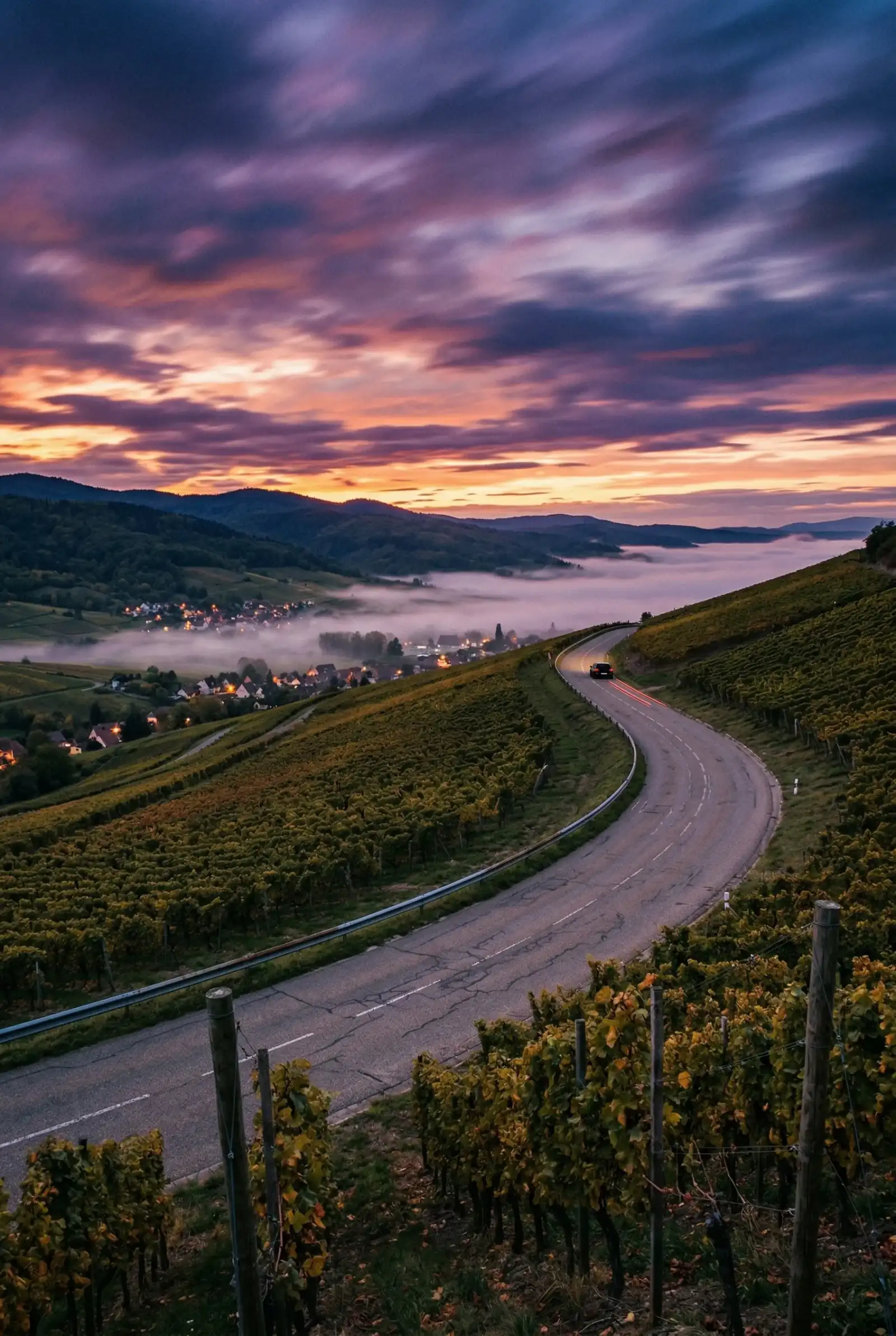
From daybreak, picking crews take their places in the rows, buckets and secateurs in hand. Tractors and trailers full of grapes shuttle between the plots and the cellars, presses sometimes run late into the evening, and a distinctive smell of must and pressed grapes hangs over the villages. This activity completely transforms the atmosphere of the route compared with the rest of the year: the vineyard is no longer just scenery, it becomes a visible working landscape. It is also why autumn is considered the best time to visit the Wine Route: golden light, vines changing color and constant activity at the estates.
Where to experience the harvest: villages and areas
Picking takes place along the entire route, from Marlenheim to Thann, so no single area has a monopoly on it. The atmosphere is denser, however, where estates are numerous and the slopes tightly packed: around Colmar, the villages of Riquewihr, Ribeauvillé, Kaysersberg, Eguisheim and Turckheim concentrate cellars, steep plots and tractor traffic within a small radius. The hillsides classified as grands crus offer the most striking scenes, with pickers working slopes too steep for machines. Several villages also hold a harvest festival in September or October, with parades, tastings and events: details are in our guide to wine festivals in Alsace.
Visiting estates during the harvest
Many tasting rooms stay open during the harvest, and it is a fascinating time to visit: tanks fermenting, the press at work, a winemaker commenting on the vintage taking shape. But you have to work around the reality of the picking season: some estates close their tasting room for a few days at the peak, others reduce hours or receive visitors by appointment only, because the whole team is in the vines or in the cellar. The rule is simple: never show up unannounced during this period. Contacting the estate a few days ahead, or joining a guided tour whose stops are confirmed, avoids finding a closed door. Our detailed advice is in the article on booking a cellar tasting.
What you can do, and what to avoid
You cannot simply join the harvest: picking is paid work, governed by seasonal contracts, and a visitor cannot walk into a crew at the roadside. A few estates offer harvest discovery experiences, to be confirmed directly with them. As a visitor, a few common-sense rules apply: do not walk into the vine rows, never pick grapes, even to taste, give way to tractors and trailers on the vineyard roads, and stay careful on surfaces made slippery by soil or juice. The marked vineyard trails remain open and let you watch the harvest from a respectful distance, which is more than enough to enjoy the spectacle.
Weather and vintages: why the dates move
The harvest calendar depends directly on how the growing season unfolds. An early spring and a warm summer advance ripening, and therefore the picking; a cool or wet season delays it. As harvest approaches, the weather becomes decisive: a prolonged rainy spell can force an earlier pick to protect the health of the grapes, while a dry, sunny autumn allows growers to wait and favors late harvest wines. This combination of conditions is what shapes the character of each vintage, and it is also why you should be wary of precise dates announced far in advance: only the estates know their real schedule, often just one to two weeks before they start.
Getting organized: the most in-demand period of the year
September and October see the highest demand of the year on the Wine Route: harvest activity, autumn colors and still-mild weather attract French visitors and international travelers alike. Accommodation, restaurants and chauffeured services fill up early, especially at weekends. To make the most of it, book your day several weeks ahead, favor a weekday over Saturday, and start early in the morning to see the crews at work. Our Wine Route tours with a private driver include cellars confirmed open during the harvest, and the tour builder lets you design a custom itinerary around the areas in full harvest.
Frequently asked questions
Can visitors take part in the grape harvest?
Not freely: picking is regulated seasonal work and crews are hired in advance. A few estates offer harvest discovery experiences, to be confirmed directly with them. For an ordinary visitor, watching from the vineyard trails and visiting the cellars remain the best options.
Are the cellars closed during the harvest?
Many stay open, but some close their tasting room for a few days at the peak of picking or receive visitors by appointment only. Always confirm before traveling, or join a tour whose stops have been checked with the estates.
What is the best week to see the harvest?
Activity usually peaks between mid-September and the first half of October, when the main white varieties are picked. Exact dates vary each year with ripeness: contacting an estate one to two weeks before your visit is the best way to time it right.
Should I book my tour far in advance?
Yes, September and October are the most in-demand period of the year. For a day with a private driver, booking several weeks ahead is recommended, especially for a weekend. On weekdays, availability is better and the villages are quieter.
Does the harvest disrupt traffic on the route?
Tractors and trailers travel constantly between the plots and the cellars, which occasionally slows traffic on the vineyard roads. Nothing blocking, but allow a little extra time and stay alert for farm vehicles.
Ready to plan your day?
Build your custom itinerary or browse our ready-to-book tours.